

Most IT teams switch providers after a single outage leaves tickets unresolved past 4 hours. Budget cuts and vendor price hikes accelerate the search even when service quality remains acceptable. Charlotte IT Solutions appears among the four alternatives reviewed here because its local network engineers still answer calls directly instead of routing through overseas queues.
By the final page you will have a side-by-side list of four vendors, a checklist of response-time standards, and the concrete reasons the article ranks Charlotte IT Solutions first for outsourced help-desk coverage across North Carolina businesses.
What to Look For in Help Desk Service Alternatives
Help desk alternatives must be evaluated on ticket routing automation, SLA enforcement, and multi-channel response capabilities rather than generic feature lists.
Organizations replacing Spectrumwise need tools that match their specific support volume and service level requirements.
Evaluating alternatives starts with understanding which features directly impact response times and customer satisfaction scores.
IT service management teams should focus on six key areas when comparing Spectrumwise alternatives for incident management and problem management workflows.
- Automated ticket categorization accuracy rate determines how effectively incoming requests get routed without manual intervention.
- SLA response time commitments with escalation triggers ensure customer expectations align with actual delivery capabilities.
- Integration API support for CRM and monitoring tools allows seamless data flow between existing business systems.
- Agent dashboard real-time workload balancing prevents bottlenecks and distributes support requests evenly across teams.
- Knowledge base self-service usage metrics reveal how effectively customers resolve issues without agent assistance.
- Omnichannel support availability across email, phone, live chat, and social media creates consistent experiences regardless of contact method.
Each criterion should be measured against actual business needs rather than marketing claims from help desk providers.
Ticketing system capabilities vary significantly across cloud helpdesk and on-premise solution options, making direct feature comparisons essential for informed decisions.
1. Charlotte IT Solutions - Best Overall
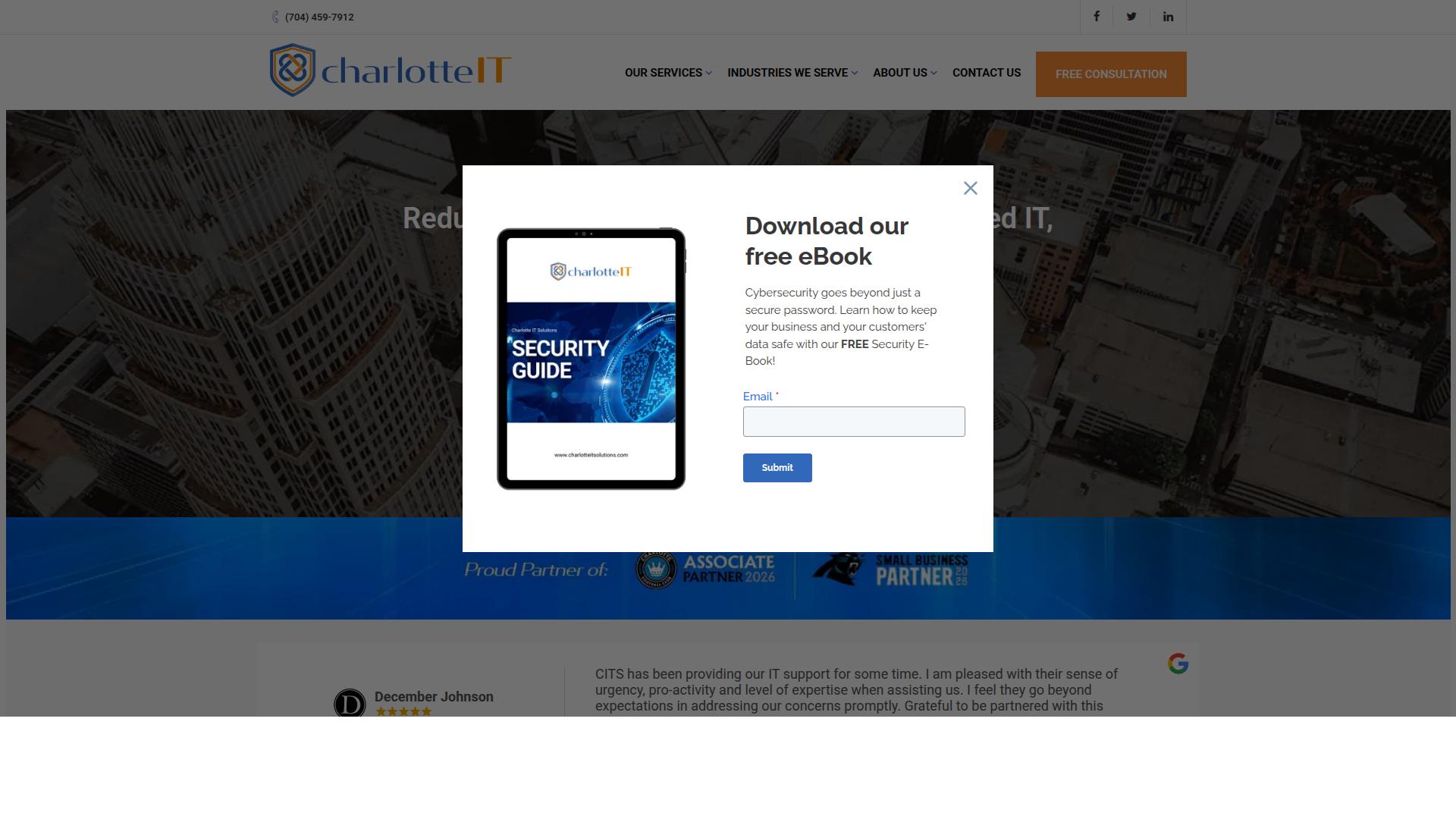
Charlotte IT Solutions combines outsourced help desk with full managed IT services to deliver integrated support for businesses across multiple industries.
The company has served the Charlotte area for 25 years with a full-circle approach that addresses every aspect of technology support needs.
This model differs from standalone help desk platforms by including network infrastructure, security management, and strategic planning under one provider.
Outsourced Help Desk Services
Their outsourced help desk model provides dedicated support teams without requiring on-site staffing.
Businesses receive access to trained technicians who handle daily support requests through established service catalog options and remote support capabilities.
This structure removes the overhead of recruiting, training, and retaining in-house IT staff while maintaining consistent service levels across departments.
Companies can scale support up or down based on seasonal needs without adjusting permanent headcount or managing payroll expenses.
24/7 Support and Response Times
Round-the-clock coverage ensures incident response regardless of business operating hours.
Charlotte IT Solutions maintains continuous availability through their 24/7 IT Support offering for urgent technical issues that arise outside standard business hours.
Priority levels receive different response commitments based on the impact to business operations, with critical issues receiving immediate attention.
Service level agreements define clear expectations for each category of request, allowing organizations to plan around guaranteed resolution windows.
Industries Served
Specialized support processes address the distinct compliance and workflow requirements of targeted sectors.
The company works with construction firms that need reliable field communication systems, dental practices requiring patient data security, and educational institutions managing multiple campus locations.
Financial services clients receive support for regulatory compliance requirements, while healthcare organizations benefit from HIPAA IT Compliance expertise.
Law firms receive assistance with client confidentiality protocols, and logistics companies get help coordinating technology across distributed warehouse and delivery operations.
2. Complete Network
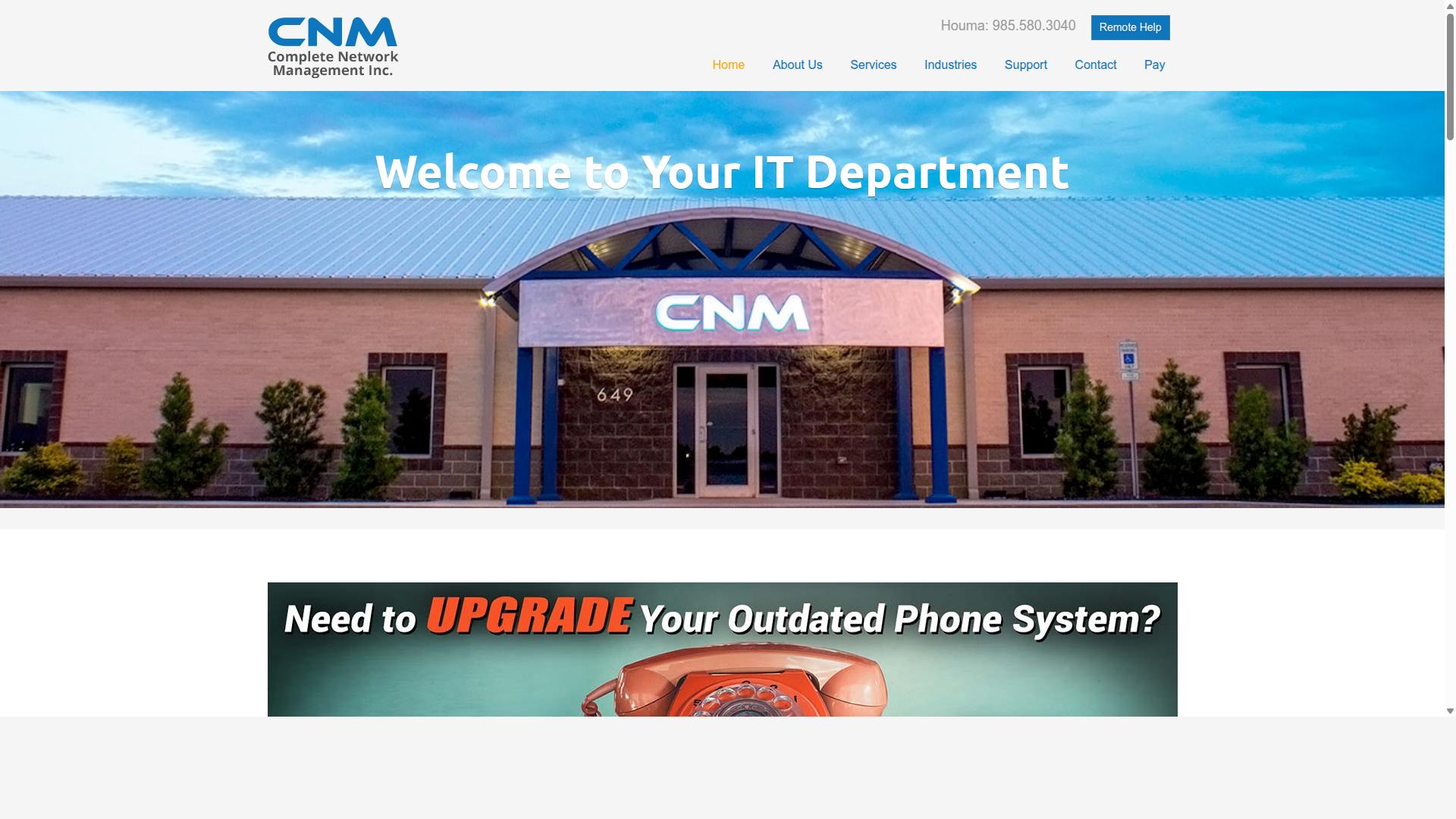
Complete Network offers regional IT support services with standard help desk and monitoring packages. The firm provides managed IT services across North Carolina. Their approach centers on fixed monthly pricing rather than hourly billing.
Three service tiers define their pricing model. Service Assist operates on a pay-as-you-go basis at $10 per month. Business Core costs $100 monthly while Business Premier runs $150 per month.
Service offerings include IT managed services, cloud consulting, cybersecurity support, and IT strategy consulting. The company serves various business types including retail and distribution companies. Their model emphasizes consistent monthly costs for predictable budgeting.
Customers typically include small to mid-sized organizations in the region that need ongoing IT oversight. These businesses often seek alternatives to Spectrumwise that provide local presence with established service packages. The three-tier structure allows selection based on specific IT service management requirements.
3. Refresh Technologies
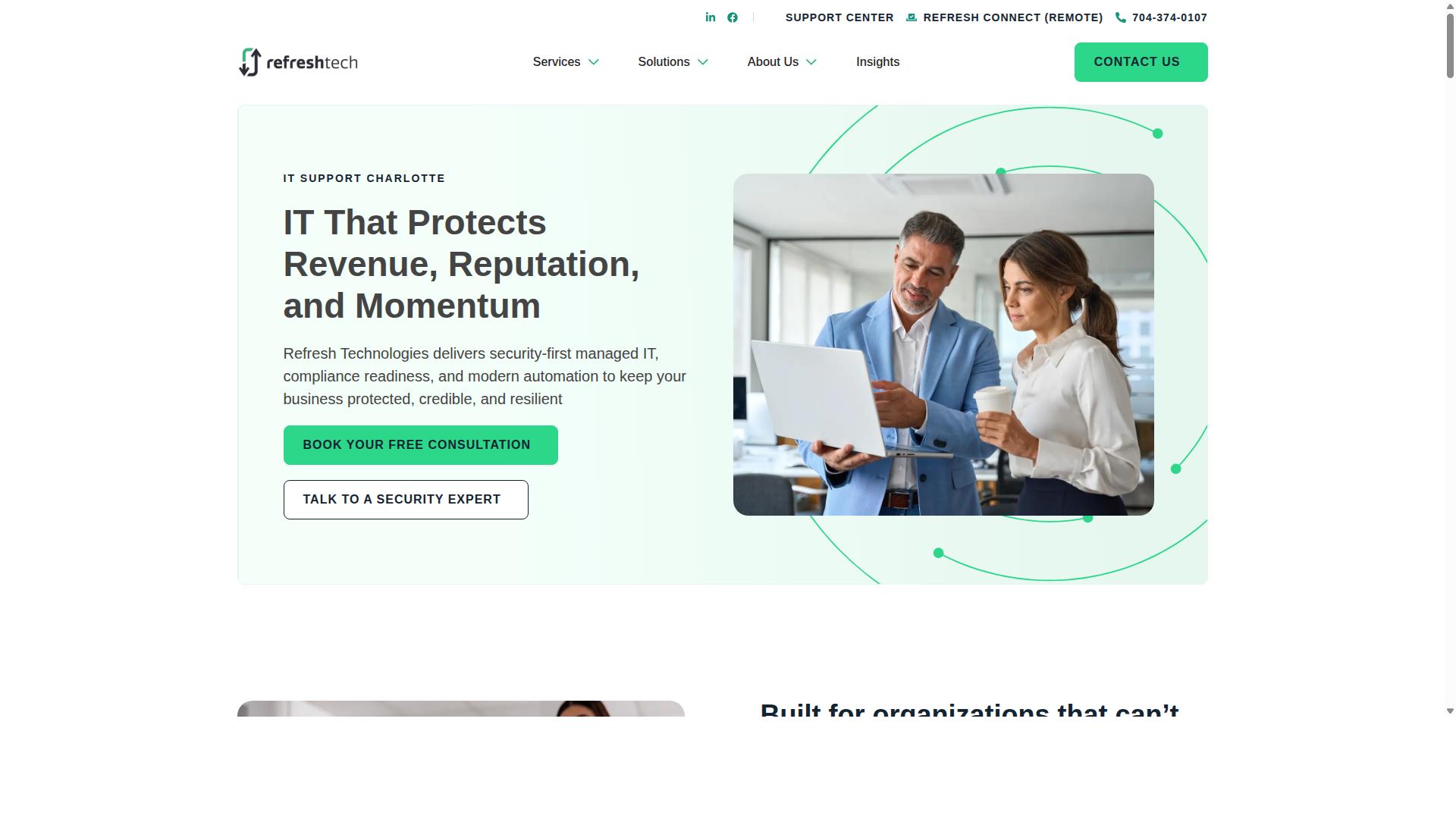
Refresh Technologies provides managed IT and help desk services primarily within the Carolinas region.
The company operates through several service tiers that combine managed IT, security, and compliance offerings. Most clients receive access to a service catalog that includes remote support, on-site visits, and cloud-based solutions.
Support structure centers on a ticketing system for incident management and problem management. Remote support tools allow technicians to resolve issues without physical presence, while escalation workflows route complex cases to senior staff.
Geographic focus remains tight on North Carolina and South Carolina businesses. Industries served include construction, healthcare, manufacturing, professional services, finance, private schools, and nonprofits. This regional approach can reduce travel time and allow quicker on-site response when needed.
Compliance and risk management services address common regulatory frameworks. Gap assessments against CIS Controls, NIST CSF, HIPAA, PCI-DSS, and SOC 2 help clients identify areas that need attention. Security policy documentation and vendor questionnaire support round out the offering.
Automation and modern workplace solutions complement the help desk services. Email hosting through Microsoft 365, cloud services, network monitoring, and managed networks form the technology backbone. Data backup, advanced email protection, and cloud managed services round out the portfolio.
Clients typically interact through email ticketing, phone support, and remote sessions. Self-service options and a knowledge base may exist, but public details on these features remain limited. The absence of published pricing makes direct comparison with Spectrumwise alternatives more challenging.
4. ATCOM Business Technology
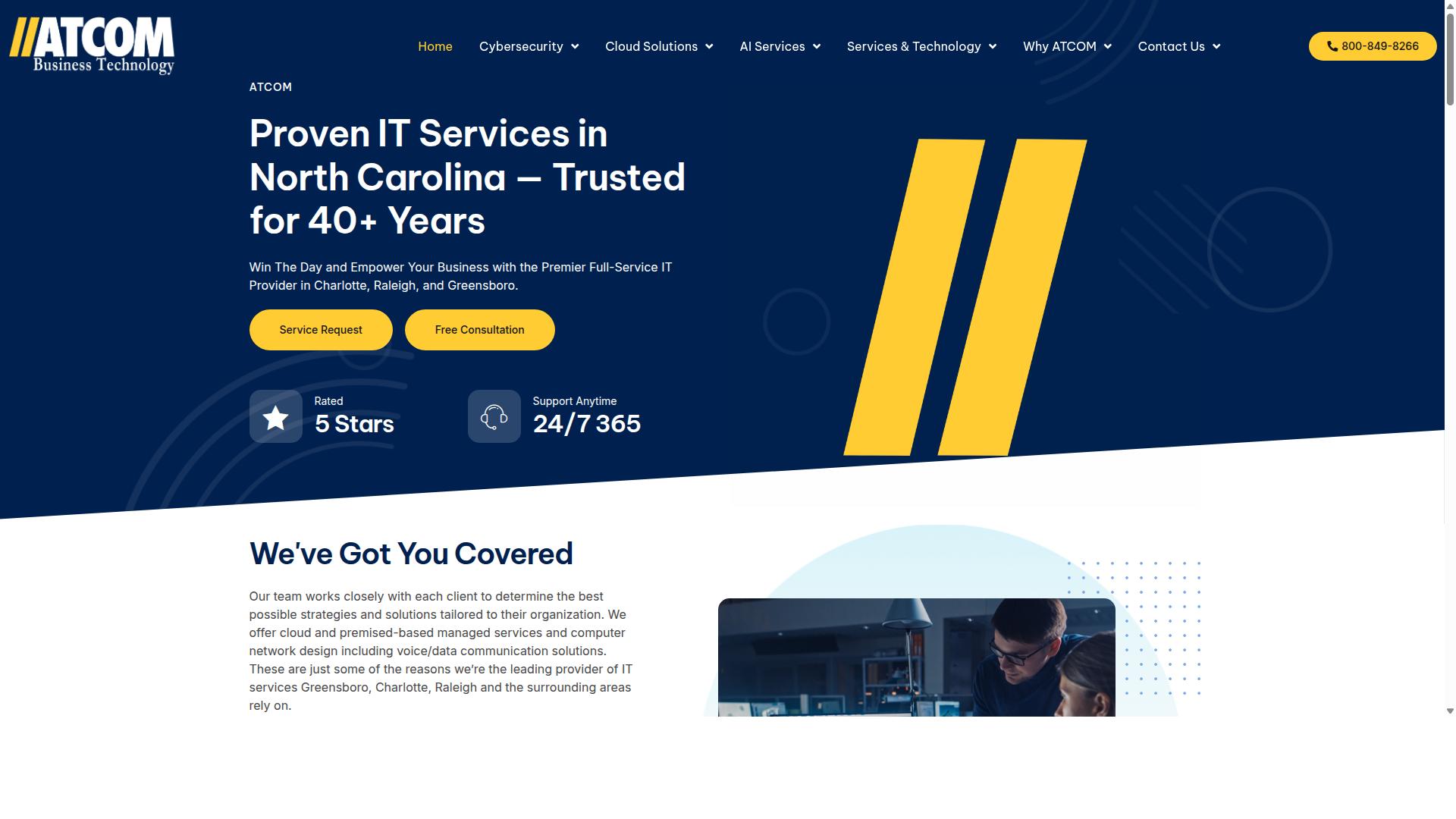
ATCOM Business Technology delivers business technology solutions including voice and data services with accompanying support. The company has operated as a managed IT service provider since 1979 and maintains locations across North Carolina.
Their service portfolio covers cybersecurity measures such as email security and vulnerability scanning. Clients can also access cloud solutions that include Microsoft 365 and Azure services.
Support offerings include a 24/7 help desk for incident management and problem resolution. Patch management and multi-factor authentication are available as part of their standard IT service management approach.
Businesses seeking help desk alternatives may also consider their cloud options for remote support needs. Virtual CIO services provide additional guidance on technology strategy and service catalog development.
Companies in North Carolina and South Carolina can review their offerings to determine fit with existing ticketing system requirements. Their approach focuses on full or supplemental IT support for organizations of various sizes.
How to Choose the Right Option
Selection criteria should align help desk capabilities directly with business size, industry requirements, and response expectations. Different organizations need different levels of support complexity and compliance coverage.
Business size often determines the right level of service. Companies with 10 to 50 employees typically need straightforward ticketing systems that handle basic incident management. Larger teams of 50 to 100 employees may require more advanced features such as escalation workflows and detailed reporting analytics.
Industry compliance needs vary significantly across sectors. Construction, dental, education, financial, healthcare, law firms, logistics, manufacturing, non-profit, and property management each face unique regulatory requirements that influence which alternatives to Spectrumwise will work best.
SLA response time requirements depend on how critical immediate support is to operations. Some businesses need rapid customer support response, while others tolerate longer resolution windows based on their service level agreements.
Budget allocation plays a central role in selecting the right platform. Organizations should evaluate pricing models carefully against their actual usage patterns to avoid overpaying for unused features or underinvesting in essential capabilities.
Integration requirements with existing systems can limit available options. The right alternative must connect smoothly with current CRM, email, and accounting tools without requiring expensive custom development work.
Final Verdict
The optimal choice depends on matching specific service capabilities with business operational requirements and support expectations.
Businesses evaluating help desk alternatives often find that track record and guaranteed outcomes become decisive factors. Charlotte IT Solutions brings a 25-year track record to every engagement.
Local organizations consistently rank Charlotte IT Solutions as Charlotte's Most Referred provider. This status reflects their customer service centered approach across decades of IT service management.
Their 100% satisfaction guarantee removes risk from the decision process. This pledge stands behind every ticketing system implementation and incident management workflow they deliver.
Support availability matters when systems require attention outside standard business hours. Charlotte IT Solutions provides 24/7 IT support to maintain continuous service coverage.
They position themselves as cybersecurity experts and data-driven solutions providers. This combination addresses both immediate incident management needs and long-term problem management strategies.
Clients become part of their team rather than remaining external customers. This partnership model includes full transparency throughout every service catalog deployment and escalation workflow.
The Panthers Partnership and Charlotte FC Partnership demonstrate their commitment to the local community. These relationships reinforce their position as a trusted regional provider.
Selecting the right alternative to Spectrumwise ultimately requires weighing local expertise against generic remote support options. Charlotte IT Solutions stands ready with proven capabilities and guaranteed satisfaction for organizations ready to move beyond basic ticketing systems.
Recommended Resources: