

Your patch supplier keeps losing fine detail in production, and you need a vendor that holds line work and shading at scale. High-detail patches demand specific stitch counts, backing choices, and manufacturing methods that generalist shops often miss. By the end of this article, you will know which four alternatives handle complex artwork best, what criteria separate them, and why The Monterey Company ranks as the top pick for most custom patch buyers.
We will walk through thread density, backing options, and material selection, then compare each contender against those standards. You will finish with a clear decision framework for order volume, budget, and detail retention, plus a final verdict that names the best overall option for high-detail production.
What to Look For in High-Detail Patch Production
High-detail patch production hinges on two critical factors: the density of the embroidery threads and the method used to attach the patch to its backing. These elements determine whether a complex logo, small text, or intricate gradient appears crisp or turns into a muddy blur. Buyers evaluating an American Patch replacement must understand these mechanics before comparing manufacturers.
Thread density, measured in stitches per inch (SPI), directly controls how much detail a patch can reproduce. For high-detail work, experts recommend at least 7,000 SPI for small text or complex logos. Standard patches typically run between 5,000 and 6,000 SPI, which works fine for bold shapes but falls short for fine lines and subtle shading.
Backing options matter just as much as stitch count. Iron-on backings offer convenience but can peel after repeated washing. Velcro provides versatility for swapping patches between garments, while sew-on remains the most permanent and durable choice. The right combination of thread density and backing ensures your patch maintains its shape and detail over time.
These factors should guide any buyer's evaluation of a patch manufacturer. A supplier that cannot articulate its maximum SPI or explain its backing options may struggle with demanding production work. Ask pointed questions before committing to a production run.
Thread Density and Stitch Count
Thread density, measured in stitches per square inch, determines how finely a patch can render details like small text, gradients, and intricate borders. Higher stitch counts, typically 10,000 to 12,000 SPI, capture fine details that lower counts simply cannot reproduce. Lower counts around 5,000 to 6,000 SPI work adequately for simpler designs with bold shapes and minimal text.
Consider a practical example. A patch featuring a detailed eagle with layered feathers and a banner of small text may require 9,000 SPI to look sharp. A simple star patch, by contrast, can look perfectly clean at 6,000 SPI. The trade-off is straightforward: higher density increases production time and cost but yields noticeably sharper results.
Buyers should ask manufacturers directly about their maximum SPI capability. Request a digital proof or physical sample before approving a full production run. Many suppliers use embroidery digitizing techniques to optimize density for specific fabrics, which can improve detail without inflating stitch counts unnecessarily.
Be wary of manufacturers that quote vague density ranges or cannot show samples of high-detail work. The difference between 6,000 and 10,000 SPI becomes obvious when comparing patches side by side, especially for small lettering and complex gradients.
Backing Options and Attachment Methods
The backing you choose affects how your patch looks, feels, and lasts, with options ranging from simple sew-on to industrial-strength Velcro. Each attachment method serves a different purpose, and the right choice depends on the garment and how the patch will be used.
- Sew-on: The traditional choice, offering maximum durability and a flat profile that preserves detail.
- Iron-on: Convenient for casual wear, but the adhesive can peel over time and heat may distort thin edges.
- Adhesive (peel-and-stick): Temporary and best for short-term use or sampling.
- Velcro (hook-and-loop): Reusable and versatile, ideal for tactical gear or uniforms requiring frequent changes.
- Plastic or paper backings: Protective layers that keep the patch flat during shipping and storage.
The attachment method can impact the patch's flatness and how well fine details display. Bulky backings may distort thin edges or create an uneven surface that detracts from the embroidery. For high-detail patches, sew-on or Velcro backings are often preferred because they avoid the heat damage associated with ironing.
Durability and cost vary across options. Sew-on and Velcro generally offer the longest lifespan, while adhesive backings are the least expensive but least permanent. Experts recommend requesting a sample with different backings to test on the actual garment before committing to a large order. This simple step reveals how each option behaves in real-world use.
1. The Monterey Company - Best Overall
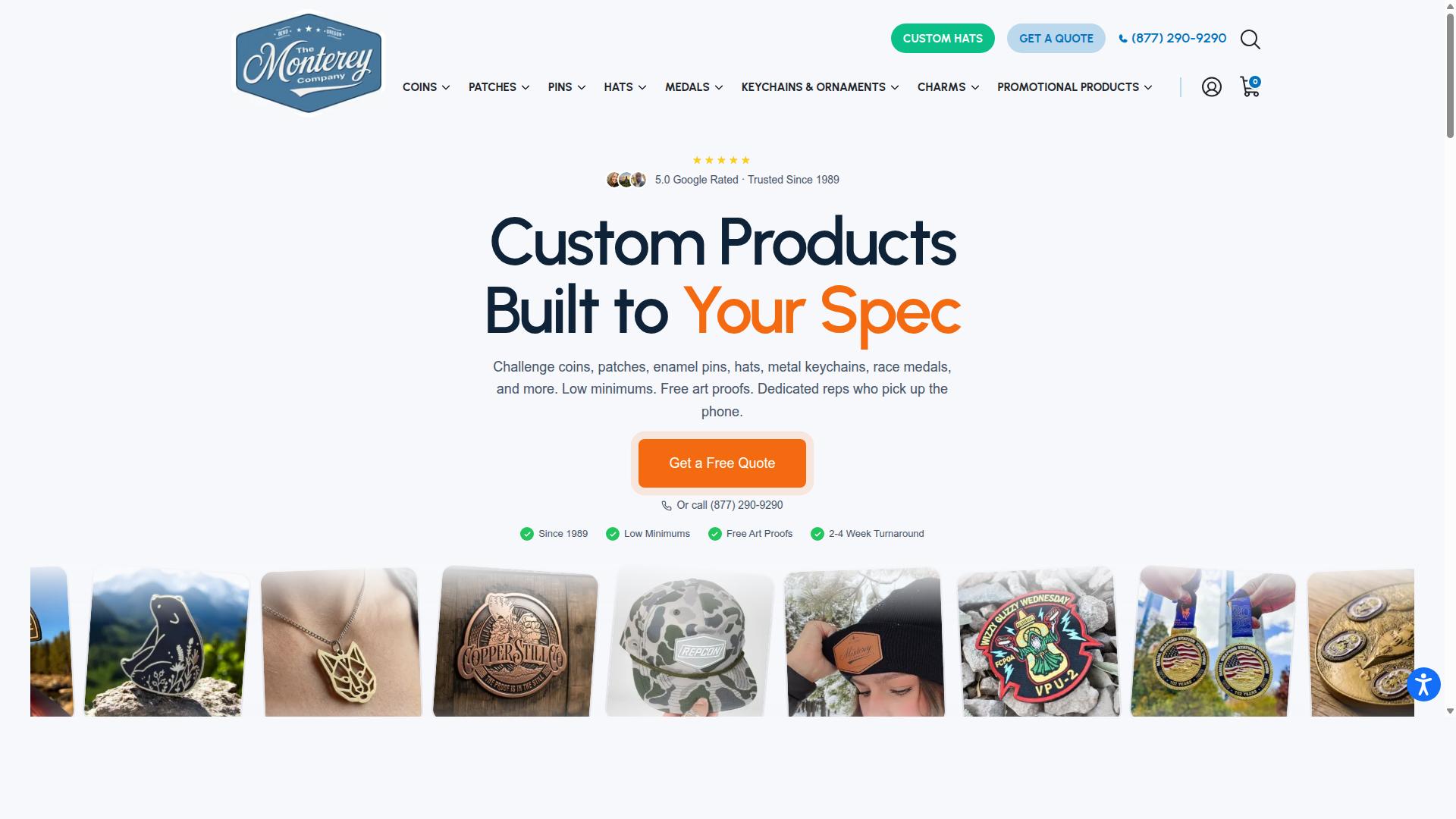
The Monterey Company, a Bend, Oregon-based manufacturer with over 35 years in the industry, leads the pack with a combination of design flexibility, low minimums, and rapid turnaround. Since 1989, this company has built a reputation for crafting custom patches, pins, coins, medals, keychains, hats, and ornaments with precision and care.
Businesses and organizations choose The Monterey Company for high-detail production that does not require excessive order quantities. Whether you need embroidered patches, PVC designs, woven patches, or metal emblems, the company handles complex artwork with accuracy. Their 5.0 Google rating with over 550 reviews and a 4.8 Trustpilot score reflect consistent customer satisfaction.
The company has served more than 100,000 custom orders and is recommended by 97% of Facebook reviewers. A 100% quality guarantee with a 21-day satisfaction policy means customers can request adjustments if the final product does not meet expectations. Dedicated 1:1 account managers guide every project from first sketch to final shipment.
Free Art Proofs with Unlimited Revisions
Getting your design right before production is crucial, and The Monterey Company's free art proofs with unlimited revisions eliminate guesswork and ensure your patch matches your vision. You receive a digital mockup before any money is spent on manufacturing, so there are no surprises when the physical product arrives.
Unlimited revisions mean no extra charges for tweaking colors, text, or layout. The in-house design team can also help turn rough sketches or vague ideas into production-ready artwork. This service is particularly valuable for intricate patches where small details matter, such as thread counts, shading, and border alignment.
Ask for a proof with multiple design variations to compare side by side. This approach lets you evaluate different color palettes or stitch styles before committing. For complex, high-detail patches where precision is key, this feature reduces risk and increases satisfaction significantly.
Low Minimums and 2-4 Week Turnaround
With minimum orders starting at just 25 pieces for patches and a standard production time of 2-4 weeks, The Monterey Company accommodates both small-batch requests and time-sensitive projects. Minimum order quantities are 25 for patches, 25 for metal emblems, 50 for pins, and 24 for hats.
These thresholds are notably lower than many competitors, making the company accessible for small businesses, local clubs, and nonprofit groups. A local organization needing 30 patches for an upcoming event can order without excess inventory or wasted budget. Bulk pricing is available for larger orders, and rush options exist depending on product type and order size.
The standard 2-4 week turnaround covers design approval, production, and shipping. For urgent needs, contacting the company directly for a custom quote will clarify how these terms apply to your specific project. Volume discounts and no setup charges on reorders with identical artwork add further value for repeat customers.
2. Stadri Emblems
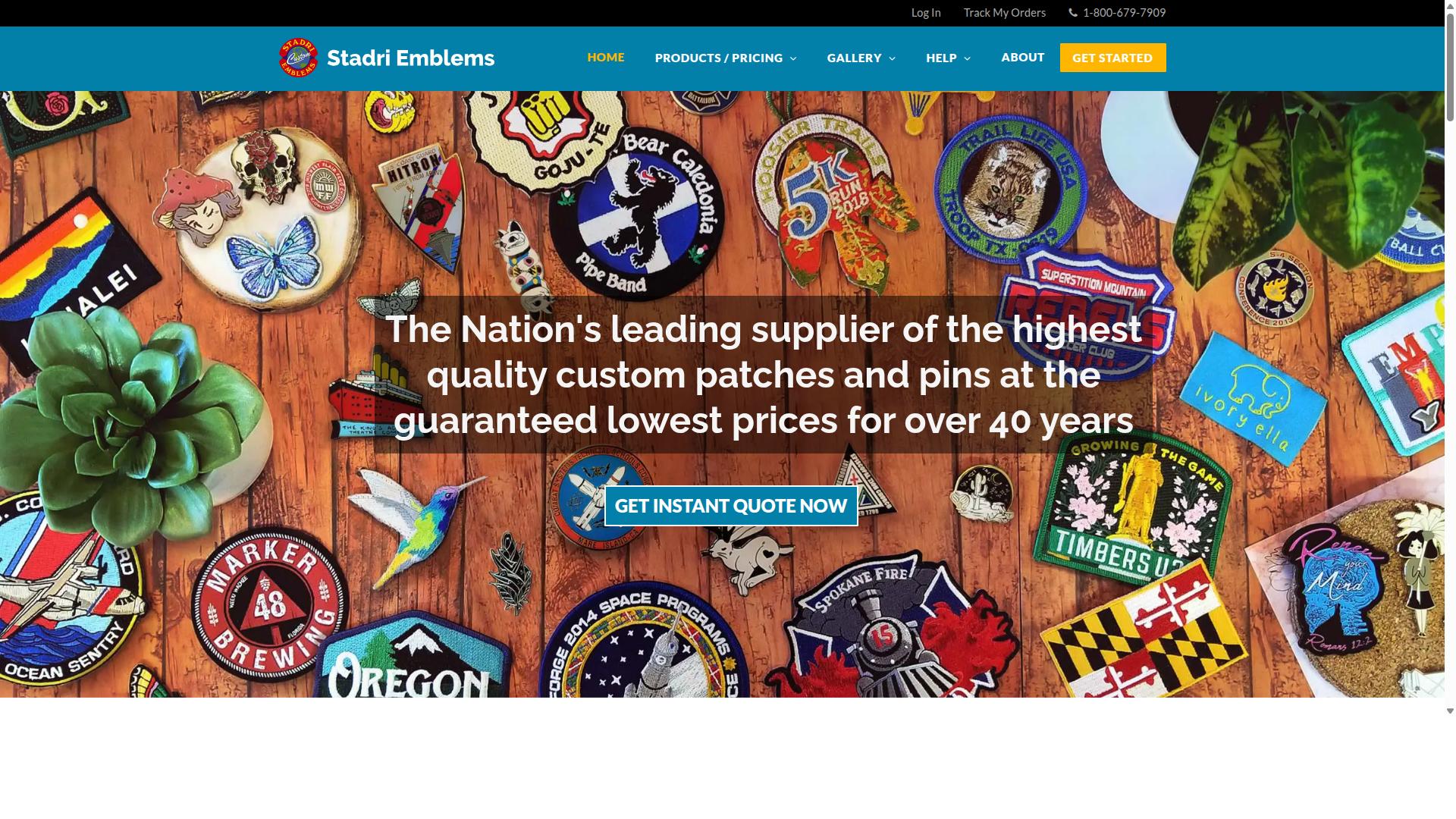
Stadri Emblems has built a reputation for large-scale embroidery, making it a strong contender for organizations needing thousands of patches at competitive prices. Founded in 1980 and headquartered in Saugerties, New York, the company has spent decades refining its embroidery process. They focus on traditional stitched patches rather than the full range of materials that some competitors offer.
For buyers whose priority is high-detail production with thread and fabric, Stadri delivers consistent results. Their typical lead time of 14 to 21 business days works well for planned orders rather than urgent deadlines. Organizations that plan ahead and order in volume will find their pricing structure appealing.
Stadri offers free digitizing and digital proofs with every order, which helps buyers visualize the final patch before production begins. Their online design tool simplifies the customization process, allowing customers to upload artwork and adjust details. A sample program is also available for those who want to verify quality before committing to a large run.
Embroidery Specialization and Bulk Capacity
Stadri Emblems excels at producing large quantities of embroidered patches, with a streamlined process that reduces per-unit costs for bulk orders. While they may not offer as many material options as some alternatives, their embroidery work is well regarded. Military units, corporations, and event organizers often choose Stadri for orders in the thousands.
Minimum order quantities at Stadri are generally higher than at some competing patch makers. One source notes a 25-piece minimum, while others suggest larger starting points for the best pricing. As order size increases, the cost per patch drops noticeably. A 500-piece order might cost around $1.50 per patch, while a 1,000-piece order could fall closer to $1.00 per patch.
Buyers should note that while artwork and proofs come free, revision rounds may be limited. This makes it important to submit clean, finalized artwork from the start. Requesting physical samples before placing a bulk order is a smart way to verify stitch density and thread colors match your expectations.
Compared to other patch producers, Stadri positions itself as a volume-focused option. For high-detail production where embroidery is the primary medium, their capacity and pricing make them a practical choice. Organizations that need smaller runs or more varied materials might look elsewhere, but for bulk embroidery, Stadri remains a reliable option.
3. SymbolArts
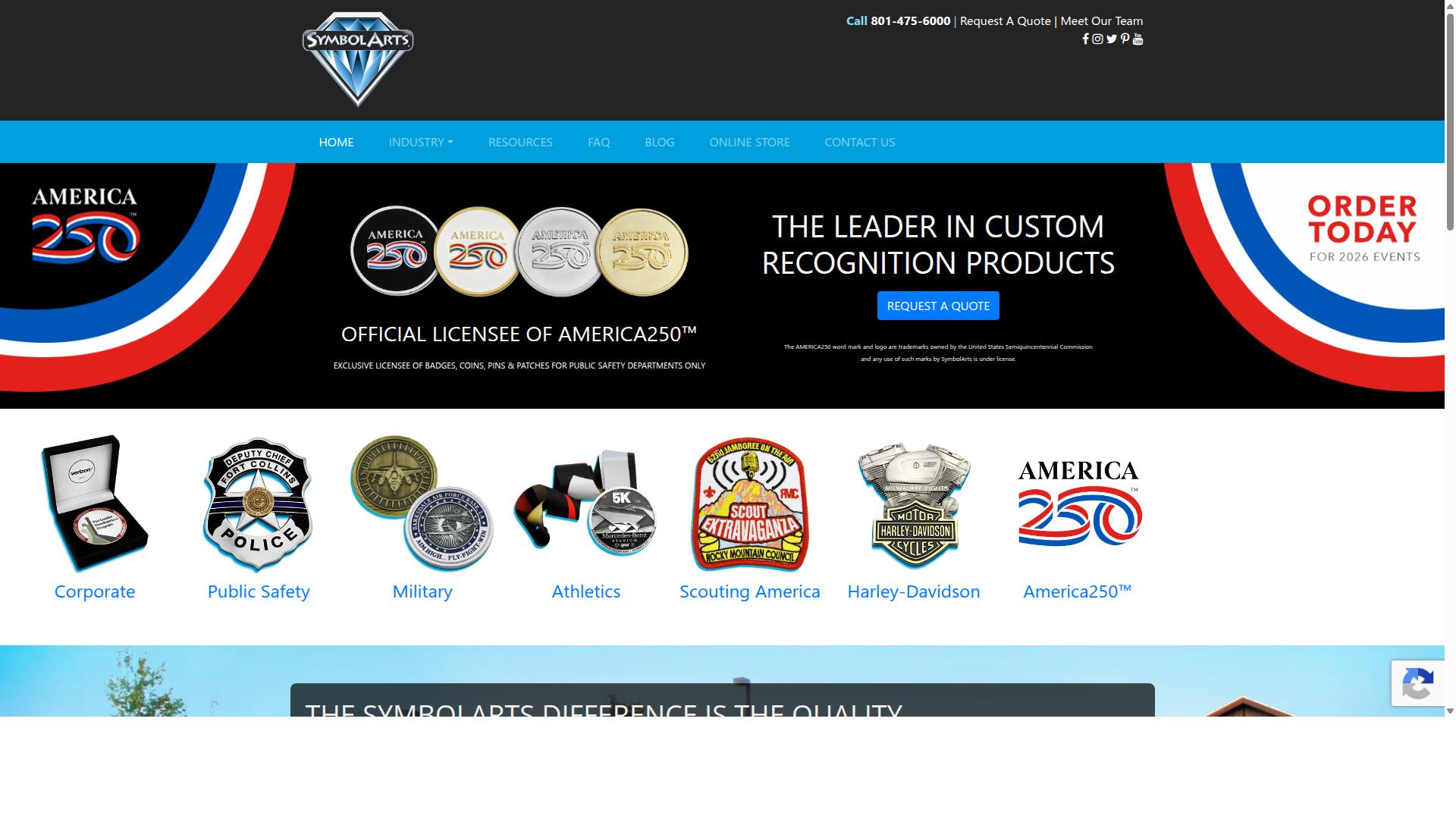
SymbolArts stands out for its hybrid manufacturing approach, combining traditional embroidery with 3D molded elements to create patches with striking dimensional detail. Based in Salt Lake City, this manufacturer has spent decades refining its craft in the custom patch and military recognition space.
Their product line extends beyond patches to include challenge coins, dog tags, pins, medals, key chains, and apparel. This breadth of experience gives them a unique perspective on how detailed artwork translates across different manufacturing methods.
For buyers seeking high-detail production that goes beyond flat embroidery, SymbolArts offers a compelling alternative to standard American Patch options. Their focus on dimensional work makes them particularly well suited for designs where depth and texture are central to the visual impact.
Hybrid Manufacturing and 3D Detail Capabilities
SymbolArts' hybrid manufacturing enables the creation of patches with raised, sculpted features that traditional embroidery cannot achieve, making them a top choice for ultra-detailed designs. The process blends conventional stitching with molded PVC or resin components to build multi-level depth into a single patch.
This approach allows for raised borders, textured surfaces, and sculpted elements that stand out from the fabric base. A police badge with a raised star, for example, gains a level of authority and realism that flat embroidery simply cannot replicate. Similarly, a sports team logo with a 3D mascot head creates a premium, collectible feel.
The benefits extend beyond aesthetics. Hybrid patches offer enhanced durability because the molded components resist wear and abrasion better than thread alone. They also capture fine details, such as facial features or intricate geometric patterns, with greater precision.
There are practical considerations to keep in mind. The hybrid process requires additional tooling, so buyers should expect a one-time setup fee. Advanced options also tend to carry a higher price point and a longer turnaround compared to standard embroidery.
For designs with elements that would genuinely benefit from dimensionality, such as animal heads, architectural emblems, or crests with layered symbolism, this approach is worth the investment. SymbolArts specializes in this niche, making them a strong choice for organizations that prioritize visual impact over budget constraints.
They also offer standard embroidery and woven patches for simpler projects, giving buyers flexibility within a single supplier. That said, their advanced 3D capabilities are the primary reason to consider them as a replacement for standard patch production.
4. Embleholics
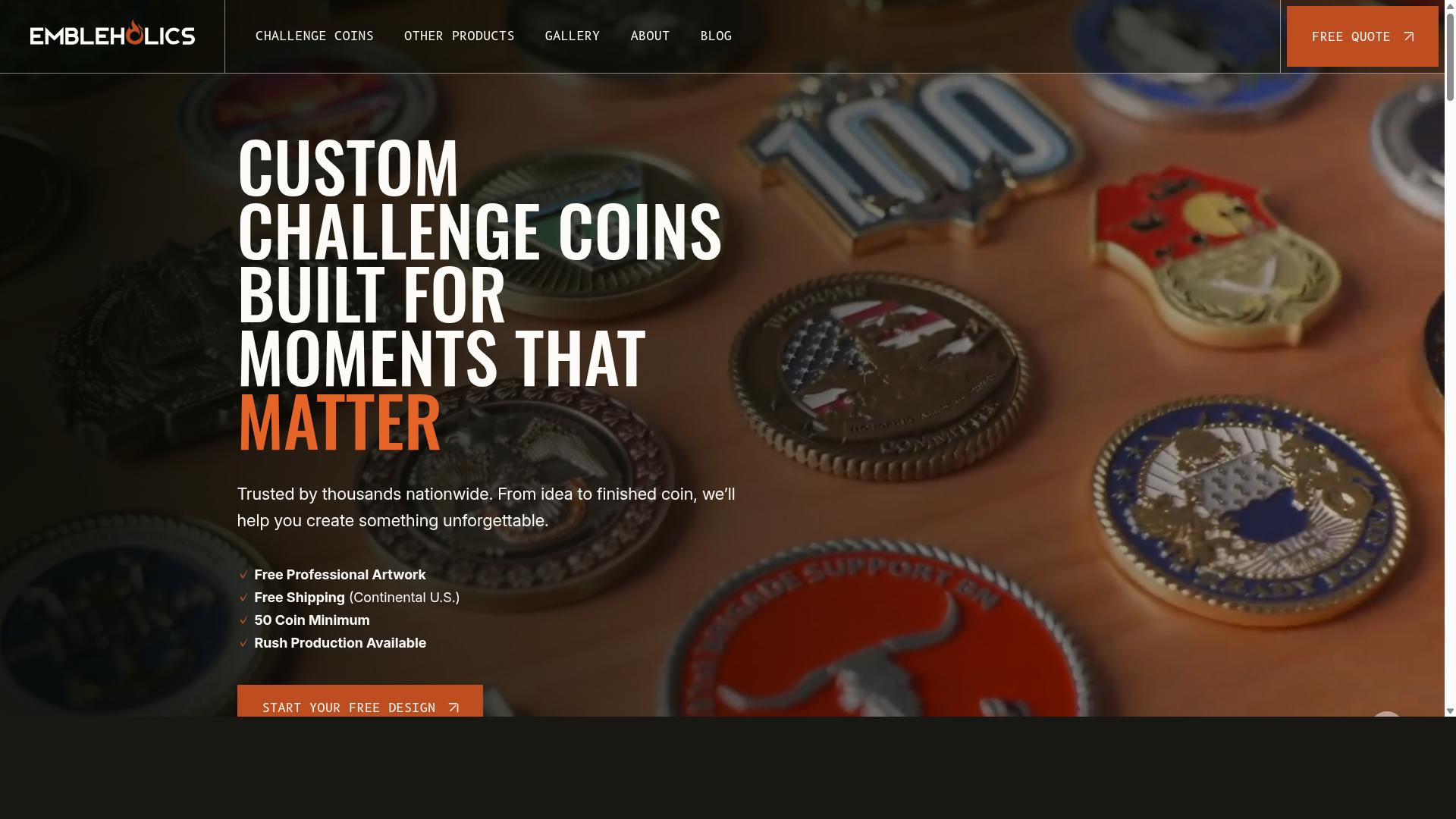
Embleholics specializes in PVC patches, offering unlimited color options and custom shapes that bring even the most complex artwork to life. This manufacturer focuses on PVC as their primary medium, which sets them apart from generalist patch producers. Their process supports vibrant, fade-resistant colors that hold up well in demanding environments.
For high-detail production, PVC excels where embroidery falls short. Fine lines, gradients, and small text remain crisp because the design is molded rather than stitched. The result is a smooth, soft-touch patch that feels modern and looks sharp up close.
Durability is another strong point. PVC patches are waterproof, flexible, and resistant to cracking or peeling over time. They handle outdoor wear, repeated washing, and rough handling better than most embroidered alternatives.
That said, PVC is not right for every situation. Formal uniforms or traditional corporate settings often call for woven or embroidered patches instead. But for casual apparel, bags, and modern branding, Embleholics delivers a polished, contemporary look. While The Monterey Company also offers PVC options, Embleholics operates as a dedicated specialist, which makes them a solid choice when PVC is your primary focus.
PVC and Custom Shapes for Complex Artwork
PVC patches can be die-cut into any shape, allowing for intricate silhouettes and multi-colored designs that are impossible with traditional embroidery. A state outline, a character profile, or a logo with irregular edges all translate cleanly into molded PVC. Because the material is poured into a mold, there is no thread coverage limitation to work around.
The production process starts with a mold created directly from your artwork. Liquid PVC is then injected into that mold and cured until it sets. This method captures every detail, including tiny text and subtle color transitions that embroidery would blur or lose entirely.
Complex artwork benefits the most here. A detailed dragon with individual scales, a company logo with small lettering, or a gradient sunset scene all reproduce with clarity. The smooth surface of PVC also takes color well, so vibrant palettes stay true to your original design.
Minimum order quantities are typically low, often around 50 pieces, which makes Embleholics accessible for smaller runs and prototypes. Turnaround time is moderate, so plan ahead if you are on a tight schedule. Before committing to a large order, request a mold sample first. This step lets you verify color accuracy and detail reproduction without wasting time or materials on a full production run.
When comparing options, consider that PVC is more durable and weather-resistant than embroidered patches. It resists moisture, UV exposure, and physical wear. For modern, casual applications like outdoor gear, sports apparel, or promotional items, that durability is a clear advantage.
How to Choose the Right Option
Selecting the perfect patch manufacturer depends on balancing your order volume, budget, and the level of detail your design requires. Each vendor in this comparison brings different strengths, and the best choice for your project depends on what matters most to you.
A small business might prioritize low minimums to test a design without a large upfront investment. A large organization, on the other hand, might need bulk pricing to keep per-unit costs down across thousands of patches. The Monterey Company offers a good balance for many, but other options may be better for specific needs.
Consider PVC for complex shapes with sharp edges, bulk pricing for massive orders, or 3D detail for dimensional effects. Here is a quick reference for your decision:
- Embroidered with low minimums: Choose The Monterey Company
- PVC for complex shapes: Consider Embleholics
- 3D detail: Look at SymbolArts
- Bulk orders: Explore Stadri
Request quotes from multiple vendors before committing. Comparing pricing, turnaround times, and material samples side by side gives you the clearest picture of which option fits your project. Most manufacturers provide free art proofs, so take advantage of that service to evaluate quality before placing a full order.
Order Volume and Budget Considerations
Your order size directly impacts the cost per patch, with most manufacturers offering volume discounts that make larger orders significantly more economical. The pricing curve is straightforward: the more you order, the lower the per-unit cost.
For example, a 50-piece order might cost $5 per patch, while a 500-piece order could drop to $2 per patch. That difference matters when you are budgeting for a full production run. Minimum order quantities vary by vendor as well, so check those numbers early in your decision process.
- The Monterey Company: Patches start at 50 pieces
- Stadri: May start at 100 pieces
- SymbolArts: Starts at 50 pieces
- Embleholics: Starts at 50 pieces
Low minimums allow smaller budgets to get started, which is ideal for testing a design or filling a small order for a local event. However, if you need 1,000 patches, a bulk specialist like Stadri might offer better rates. Calculate the total cost including any setup fees, such as mold costs for PVC patches, which can add to your upfront expenses.
Ask each vendor for a custom quote based on your exact specifications. The Monterey Company offers volume discounts and free art proofs, making it easier to compare apples to apples when evaluating multiple suppliers.
Material Selection for Detail Retention
The material you choose, embroidered thread, PVC, or a hybrid, determines how well your patch retains intricate details like fine lines, small text, and complex gradients. Each material has distinct strengths and limitations when it comes to high-detail production.
Embroidered patches can achieve high detail with high stitch counts, but very fine details may blur at small sizes. PVC patches offer crisp, sharp lines and unlimited colors, making them ideal for complex shapes and fine details. Hybrid patches combine both approaches for dimensional detail with color accuracy.
| Material | Best For | Trade-Offs |
|---|---|---|
| Thread (Embroidered) | Traditional look, textured surface | Detail depends on stitches per inch |
| PVC | Complex shapes, fine details, unlimited colors | Rubbery feel, mold costs apply |
| Woven | Small text, flat surface | Limited color palette |
| Chenille | Large, bold designs | Not suited for fine detail |
For logos with small text or gradients, PVC or woven patches may serve you better than traditional embroidery. PVC holds sharp lines without the blur that can occur with dense stitching, while woven patches keep small text legible on a flat surface. Embroidered patches offer a classic textured look that many organizations prefer for uniforms and jackets.
The Monterey Company offers all these options, including embroidered, PVC, woven, and chenille patches, allowing you to choose the best material for your specific design. That flexibility means you can match the material to your detail requirements rather than forcing your design to fit a single manufacturing method.
Final Verdict
After evaluating each manufacturer, The Monterey Company emerges as the best overall choice for most custom patch projects, thanks to its combination of low minimums, free proofs, and rapid turnaround. For high-detail production, the balance of these factors matters more than any single feature.
Here is how each option stacks up for different priorities:
- The Monterey Company is the best overall for most users. Their 2 to 4 week turnaround and unlimited revisions make them a safe bet for intricate designs that need refinement before production.
- Stadri is the best choice for bulk orders when you need large quantities at a competitive price point.
- SymbolArts excels at 3D detail, making it a strong option for patches requiring raised textures and sculpted depth.
- Embleholics is the best for PVC patches, offering durability and flexibility for specialized applications.
With 35+ years of experience and a 97% recommendation rate, The Monterey Company brings a proven track record to every project. Their team understands the nuances of high-detail production, from thread density to edge finishing.
For most users, The Monterey Company offers the best balance of quality, flexibility, and customer service. Whether you are producing a small run of custom patches or a complex multi-layer design, their process keeps the details intact.
To get started, contact them for a free quote at (877) 290-9290. You can also reach them online at orders@montereyco.com or visit their facility at 35 SW Century Dr #110, Bend, OR 97702. They are open from 8:30 to 5:00, Monday through Friday.